
Houston homes need window coverings that can handle bright sun, privacy needs, changing room uses, and a warm Gulf Coast climate. The best choice is not one product for every window, but a thoughtful mix of shades, blinds, and custom window shades based on light control, insulation, style, and budget. This guide walks through the most practical options for anyone comparing window treatments Houston homeowners commonly choose.
The best window shades in Houston are usually solar shades, cellular shades, roller shades, Roman shades, and woven wood shades, with blinds or shutters added where precise light control matters. Houston’s summer heat makes solar control especially important; National Weather Service climate normal for Houston Hobby show July average highs around the low 90s, so west- and south-facing windows often need more than decorative fabric. Energy-focused guidance from the U.S. Department of Energy also notes that properly used shades and blinds can help reduce unwanted solar heat gain while still allowing useful daylight.
That means the “best” solution depends on the room. A sunny living room may benefit from solar shades that cut glare without closing off the view. A bedroom may need cellular or blackout roller shades for comfort and privacy. A kitchen, bathroom, or utility space may call for moisture-conscious blinds or easy-clean shades for windows that see daily use.
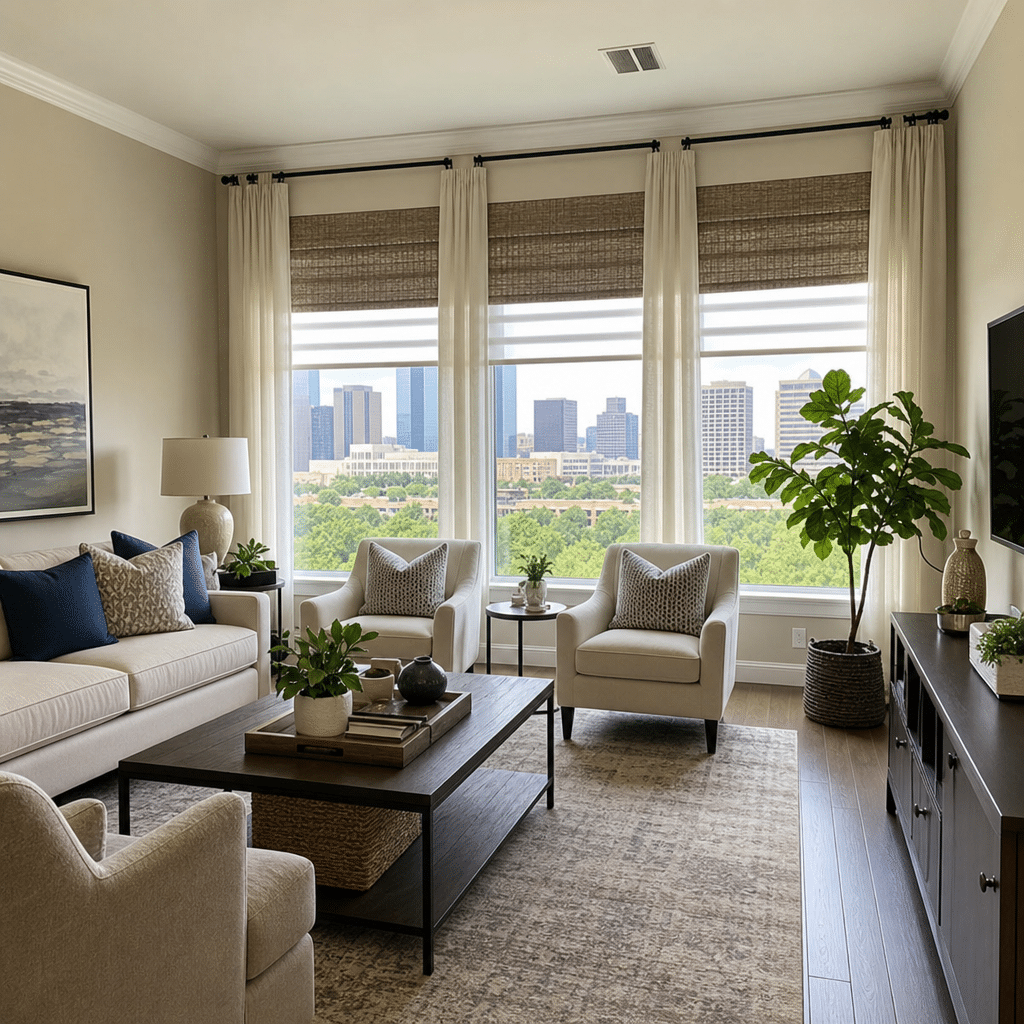
Solar shades are a strong choice for glare and heat
Solar shades are among the top window shades for Houston because they are designed to filter sunlight while preserving some outdoor visibility. They are especially useful in rooms with large glass doors, tall windows, home office screens, or afternoon sun. If you love natural light but dislike glare, solar shades can make a room feel calmer without making it feel closed in.
The key detail is openness. A lower openness fabric blocks more light and gives more daytime privacy, while a higher openness fabric keeps a clearer view. For many Houston window shades, homeowners choose different openness levels by room instead of using one fabric everywhere.
Solar shades work well for:
- Living rooms and family rooms where comfort and visibility both matter.
- Home offices where screen glare can interrupt work.
- Patio doors and large windows that receive strong sun.
- Street-facing rooms where daytime privacy is helpful.
They are not always the best standalone choice for nighttime privacy. When the lights are on indoors, visibility can reverse. For bedrooms or front rooms, consider pairing solar shades with drapery, blackout shades, or a dual-shade system.
Cellular shades add comfort and insulation
Cellular shades, also called honeycomb shades, are one of the most practical options for energy-conscious window coverings Houston residents consider. Their honeycomb pockets create a layer of trapped air between the glass and the room, which helps limit heat transfer. The Department of Energy notes that cellular shades can reduce unwanted solar heat gain, reduce drafts, and improve comfort compared with bare windows.
These shades are a good fit for bedrooms, nurseries, media rooms, and sunny upstairs spaces. They come in light-filtering, room-darkening, and blackout fabrics, so they can support different privacy and sleep needs. Top-down bottom-up operation is also useful in Houston neighborhoods where you may want daylight from the upper part of a window while keeping the lower portion private.
Cellular shades are not the sleekest option for every design style, and the pleated look is more visible than a flat roller shade. Still, if comfort is high on your list, they deserve serious consideration.
Roller shades offer clean style and flexible light control
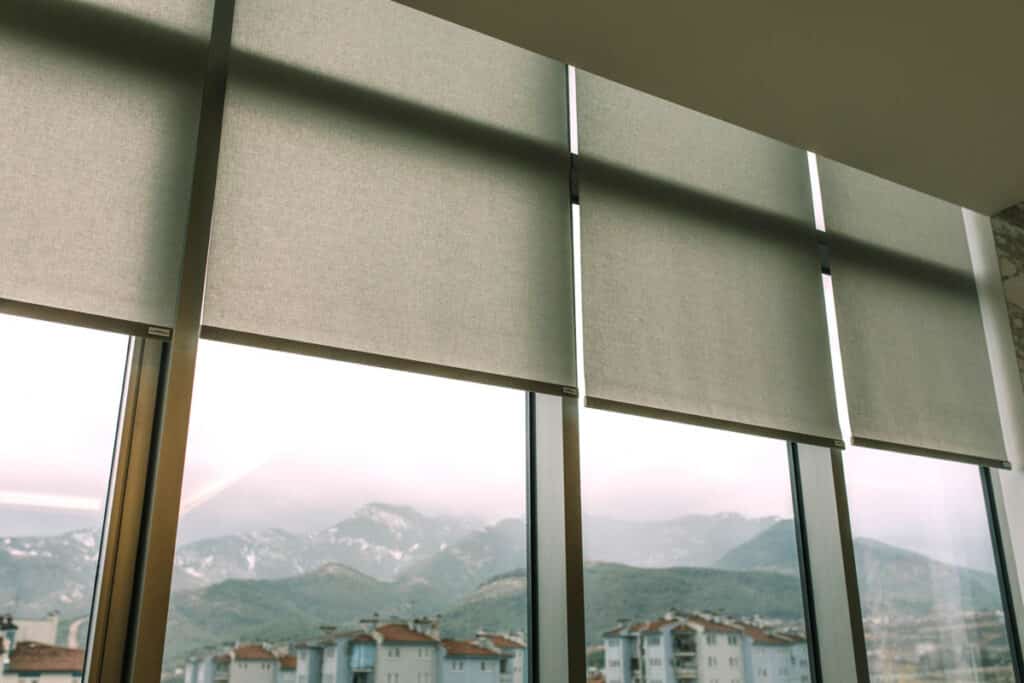
Roller shades are simple, modern, and versatile. They roll up neatly, work with many decor styles, and can be made with sheer, light-filtering, room-darkening, or blackout fabrics. If you want affordable window shades that still look polished, roller shades are often a smart place to start.
The biggest advantage is design flexibility. A crisp white roller shade can disappear into a minimalist room, while textured fabric can add softness without the volume of drapery. Blackout roller shades are popular in bedrooms and media rooms, while lighter fabrics work well in dining areas and kitchens.
For large windows, roller shades also pair well with motorization. Motorized shades are convenient for high, wide, or hard-to-reach windows and can make it easier to close coverings during the hottest parts of the day. The DOE lists roller shades among common window attachment options used for solar control and energy performance, making them a practical as well as stylish category. (energy.gov)
Are blinds better than shades for light control?
Blinds are better than shades when you want adjustable slats that tilt throughout the day, but shades are often better when you want a softer look, stronger fabric privacy, or a cleaner single-panel appearance. Blinds let you redirect daylight rather than simply raise or lower the covering, which is useful in kitchens, bathrooms, offices, and street-facing rooms.
Faux wood blinds are a common choice in Houston because they offer the look of wood with better resistance to humidity. Real wood blinds bring warmth and a higher-end appearance, but they are usually better in drier, lower-moisture rooms. Vertical blinds or vertical alternatives can work for sliding glass doors, although many homeowners now prefer panel tracks or wide roller shades for a more updated look.
Consider blinds when you want:
- Precise slat control for shifting sun angles.
- Durable materials in busy rooms.
- A classic look that works with traditional interiors.
- Budget-friendly coverage for multiple windows.
Consider shades when you want:
- Softer fabric texture and a more tailored design.
- Better blackout options for sleep or media use.
- Solar filtering for glare and UV management.
- A streamlined profile for modern spaces.
Roman and woven wood shades bring warmth and texture
Not every window treatment decision is about heat and glare. Style matters, too. Roman shades and woven wood shades add texture, pattern, and a more furnished look than many flat shade styles.
Roman shades fold neatly as they raise and can feel elegant without being overly formal. They are a strong option for dining rooms, bedrooms, offices, and living spaces where you want fabric softness. Add a privacy or blackout liner if the room faces neighbors, a street, or strong sun.
Woven wood shades use natural-looking materials such as bamboo, grasses, reeds, or textured fibers. They bring warmth to white walls, coastal interiors, transitional homes, and casual spaces. Because woven materials can be more open, liners are important if privacy or light blocking is a priority.
These decorative shades are not always the most affordable window shades, but they can make a room feel intentionally designed. Use them where the look will be noticed rather than hiding them in purely functional areas.
Custom window shades solve fit and function problems
Custom window shades are worth considering when windows are oversized, unusually shaped, shallow, extra tall, or grouped closely together. They also help when you need a very specific combination of fabric, privacy level, mount type, lift system, and color. A properly measured custom shade usually looks cleaner and operates more smoothly than a one-size-fits-most option.
Customization is especially helpful for Houston homes with large picture windows, arched architectural details, bay windows, patio doors, or open-concept rooms where all coverings need to coordinate. It also allows you to choose different functions while keeping a consistent look. For example, you might use blackout roller shades in bedrooms and light-filtering roller shades in nearby living areas in the same fabric family.
Before ordering, review these details:
- Mount style: Inside mount looks built-in, while outside mount can cover more light gaps.
- Light level: Choose sheer, light-filtering, room-darkening, or blackout based on the room.
- Privacy: Think about both daytime and nighttime visibility.
- Sun exposure: West-facing windows often need stronger glare and heat control.
- Operation: Cordless and motorized options can improve safety, convenience, and appearance.
- Material care: Kitchens, bathrooms, and laundry rooms need easy-clean, humidity-tolerant materials.
Layered window treatments create the most complete result
Layering is often the best strategy when one product cannot do everything. A solar shade can manage daytime glare, while drapery panels add nighttime privacy and softness. A cellular shade can improve comfort, while side panels make the window feel more finished. A blackout roller shade can handle sleep needs, while a decorative valance or fabric treatment adds personality.
The Department of Energy and related building guidance recognize a wide range of window attachments, including cellular shades, roller shades, louvered blinds, solar screens, awnings, and other coverings, because different products solve different performance needs. In practical terms, Houston homeowners should think in layers when a room has competing goals: bright views during the day, privacy at night, heat reduction in summer, and a finished interior design.
Layering is especially useful for:
- Primary bedrooms that need blackout, privacy, and softness.
- Living rooms where solar control and design both matter.
- Dining rooms that need occasional privacy but not full blackout.
- Nurseries and children’s rooms where light control and cordless operation matter.
How do you choose affordable window shades without sacrificing quality?
Choose affordable window shades by prioritizing the rooms that need performance most, selecting durable standard materials where possible, and reserving premium upgrades for windows where they make a real difference. You do not need the most expensive product on every window to get a cohesive result.
Start with the problem you are trying to solve. If glare is the issue, solar shades may be the best value. If sleep is the issue, blackout roller or cellular shades may be more useful. If privacy and tilt control matter, faux wood blinds may stretch the budget further across multiple rooms.
A practical budget plan might look like this:
- Invest more in large sunny windows, bedrooms, and frequently used living spaces.
- Keep it simple in guest rooms, hallways, closets, and utility areas.
- Use one color family throughout the home for a more cohesive look.
- Add motorization selectively on tall, wide, or hard-to-reach windows.
- Choose cordless controls where safety, clean lines, or ease of use matter.
Affordable does not have to mean temporary. A well-selected basic shade that fits correctly, suits the room, and operates reliably will usually look better than a trendy option chosen without a plan.
The best choice balances climate, comfort, privacy, and style
The best window coverings Houston homeowners can choose are the ones that match real daily life. For many homes, that means solar shades in bright living areas, cellular shades in comfort-focused rooms, roller shades for clean style, and blinds where adjustable light control is essential. Roman and woven wood shades add warmth when design impact matters.
If you are comparing window shades for your Houston home, the right solution starts with understanding how each room handles sunlight, privacy, heat, and everyday use. Plantation Shutters Houston offers a wide selection of custom shades, including roller, cellular, Roman, woven, pleated, and sheer options, along with blinds and shutters to help you find the right fit for every space. Contact our team today to discuss your window treatment needs and request a quote for your Houston-area home.